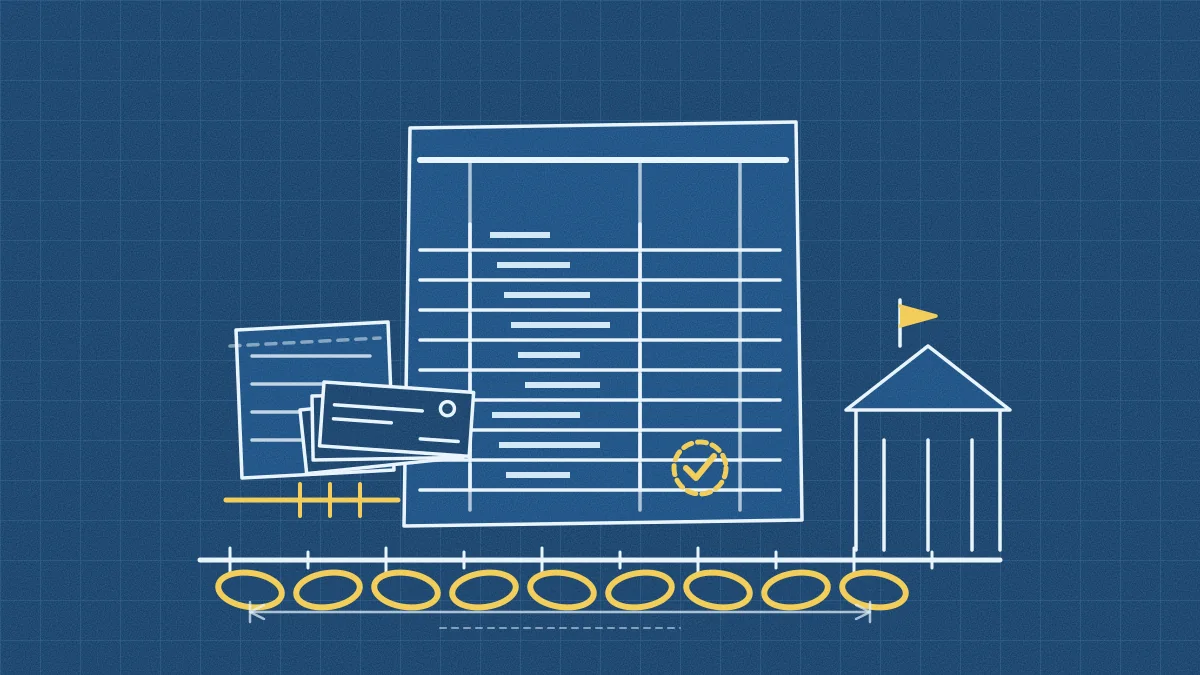
A contractor raised running bills on a Mayur Vihar building between 2000 and 2003 and went to court only in 2014. On those dates alone the suit looks hopeless. The Delhi High Court thought so and rejected the plaint. On 6 November 2026 the Supreme Court restored it, because the paying society's own balance sheets, year after year until 2013, still carried an amount "pertaining to 2004-05". The question was never when the bills fell due. It was whether the debtor kept admitting the debt in writing before each clock ran out.
A summary suit that never reached the defence stage
Wazir Hussain, the original plaintiff, had a civil works contract dated 10 February 2000 with a cooperative housing society for a multi-storey building. In 2014 he filed a suit under Order XXXVII CPC for Rs. 11,16,000 on the running bills, with Rs. 11,04,840 as interest at 9 per cent and further interest to realisation. The society did not wait for the trial. It applied under Order VII Rule 11 for rejection of the plaint, saying the suit was time-barred, disclosed no cause of action and could not stand because of alleged embezzlement.
- 10 Feb 2000: works contract; running bills raised from 2000 to 2003
- 2004-05 to 2012-13: the society's balance sheets and bank reconciliation statement carry the amount forward
- 31 Mar 2013: the last balance sheet entry the plaintiff relies on
- 2014: suit filed under Order XXXVII
- 6 Jan 2020: Trial Court refuses to reject the plaint
- 4 Nov 2024: High Court allows revision (C.R.P. 66 of 2020) and rejects the plaint
- 6 Nov 2026: Supreme Court sets aside the High Court order; the suit is revived
The Trial Court refused the application on 6 January 2020. It noted that the balance sheets for 2004, 2005 up to 2013 reflected the dues, that this amounted to acknowledgment giving a fresh period, and that genuineness of the bills was a matter for evidence. The High Court reversed that in revision. It said the bank statements did not show an acknowledgment beyond 2005, and that no balance sheet had been produced showing one. It also read the 2013 balance sheet, with Rs. 21,79,465 under sundry creditors for 2004-05, as not saying the sum was payable to this contractor.
Three years from what, exactly?
The judgment does not name the Article of the Schedule, but the arithmetic needs one. A suit for the price of work done at the defendant's request, where no time is fixed for payment, is governed by Article 18 and runs three years from when the work is done (the contract Articles chapter sets out Articles 14 to 18). If the last bill was for work done in 2003, the plain period expired in 2006. A plaint of 2014 is eight years late on the face of the bills.
Section 3 makes limitation a bar of the remedy, and the court must dismiss a suit filed beyond time even if no one pleads it. So the plaintiff's only road was to show that the clock had been restarted. The tool is Section 18 of the Limitation Act, 1963: where, before the expiry of the prescribed period for a suit in respect of any property or right, an acknowledgment of liability has been made in writing signed by the party against whom the right is claimed, a fresh period is computed from the time the acknowledgment was signed.
Run the numbers with a three-year period. An entry in the 2004-05 balance sheet (March 2005) carries limitation to March 2008. An entry in the 2006-07 balance sheet falls inside that, and renews it to 2010, and so on. A signed entry in the year to 31 March 2013 gives time until 2016, and a suit in 2014 is well inside it. The judgment says as much: the entries, carried to 2013, were "renewing the limitation period every year".
Why a balance sheet counts as writing, and what the Court cautioned against
Section 18 asks for four things, and the ruling shows how each is read:
| Requirement | What it means | How the Court applied it |
|---|---|---|
| In writing and signed | By the party liable, or by a duly authorised agent (Explanation (b)) | A balance sheet is a signed accounting document of the society; the Court treated the entries as the society's own acts |
| Before the period expires | An acknowledgment of a debt already barred does not renew it | The chain began in 2004-05, inside the first three years |
| Of a subsisting liability | Read with the surrounding circumstances; it need not promise payment, and a refusal or set-off does not defeat it (Explanation (a)) | Amount carried forward as "Balances pertaining to 2004-05", with cheques to the contractor in the bank reconciliation |
| Jural relationship | The writing must indicate a relationship of debtor and creditor, not necessarily name the creditor | Para 14: no fixed format and no need to name the creditor |
The Court relied on Asset Reconstruction Company (India) Ltd. v. Bishal Jaiswal (2021 INSC 254), a three-judge decision holding that entries in books of account, including balance sheets, may be an acknowledgment under Section 18. It repeated the caveat from that case: the entry must be read in the context of the whole balance sheet, with any notes or the auditor's report that qualify it. Axis Bank Ltd. v. Naren Sheth (2023 INSC 820) was cited for the same principle.
What carried the day was the cumulative picture. The 2004-05 reconciliation statement named three cheques issued to "Wazir Hussain Contractor", which tied the plaintiff to the society's books. Later balance sheets carried Rs. 21,79,134 under "Balances pertaining to 2004-05". The Court noted that the plaintiff's claim formed part of that sum. It refused to call this a conclusive admission of the whole claim. Which part of the carried-forward amount was his, and how the cheques related to the bills, are for evidence.
The mistake the High Court made at the Rule 11 stage
The Order VII Rule 11 power is narrow, and clause (d) lets a court reject a plaint when the suit "appears from the statement in the plaint to be barred by any law". The CPC commentary explains why limitation is the common candidate, and also the discipline that goes with it: the court looks at the plaint and its documents, assumes the pleaded facts, and does not weigh the defence. The chapter on plaint rejection and the limitation interfaces chapter trace how Order VII Rule 6 makes a plaintiff plead the ground of exemption when he sues after the prescribed period. Here the plaint did exactly that, by relying on the balance sheets.
Limitation is often called a mixed question of law and fact, and this case shows why. The legal rule, that a written acknowledgment renews the period, is settled. Whether the entries in a society's accounts are an acknowledgment of this debt owed to this plaintiff, in context, is a question of what the documents say. The High Court decided that question against the plaintiff on a Rule 11 application. The Supreme Court said that at this stage the court "ought not to have gone into the depths of evidence and conclusively determined the non-existence of liability". It was to ask only whether the plaint disclosed a prima facie case on the material available.
That also explains the Court's answer to the defendant's last point, that a time-barred debt cannot be revived indefinitely without an application for condonation of delay. Section 5 forgives delay in an appeal or application, and the Court had no need for it. Where the entries are acknowledgments under Section 18, the fresh period runs automatically from each, so there is no delay to condone.
An evasive denial can acknowledge, too
The CPC commentary records an older line that points the same way. In a bank's suit for a loan, the borrower had not specifically denied in his written statement that he had paid in from his own savings account; it was held that such evasive denials amounted to acknowledgment of the debt and that dismissal on limitation was improper (Allahabad Bank v. Subhash Chand, AIR 2007). Likewise, where a plaintiff relied on a letter to save limitation and the defendant only said the suit was not saved by it, the letter was taken as admitted (Laxminarayan v. Chimniram, 1917). These were pleadings. Yusuf is about accounts. Both teach that a debtor's own paper is the plaintiff's best evidence against a limitation defence.
What the judgment leaves open
- The Court did not say the plaintiff is owed anything. The relation between the cheques, the carried-forward amounts and the sum claimed is for trial. The judgment also records the carried-forward figure as Rs. 21,79,465 for 2013 and Rs. 21,79,134 in the later years, and does not reconcile them.
- It did not decide whether every balance sheet in the chain was signed within the preceding period. It proceeded on the plaintiff's case that the entries ran year by year, and left the defence its chance to attack a broken link, a qualifying note or an auditor's remark.
- The other objections raised in the Rule 11 application, want of cause of action and alleged embezzlement, were treated as matters needing evidence. All questions on merits remain open.
- No Article of the Schedule is named, so the three-year assumption above is the commentary's, not the Court's.
- The plaint must be rejected, because the bills are more than three years old and no condonation was sought
- The plaint must be rejected, because a balance sheet is never an acknowledgment
- The plaint cannot be rejected at this stage, because entries read in context can amount to written acknowledgments under Section 18 and their effect is for trial
- The plaint can be rejected only if the auditor certifies the debt as barred
Answer
(c). Entries in balance sheets may be acknowledgments under Section 18, read with the whole balance sheet. At the Rule 11 stage the court does not weigh evidence.
- It starts a fresh period of limitation from the date it was signed, provided it was made before the earlier period expired
- It revives a debt already barred, if made within three years after the bar
- It extends the old period by a further three years from the original due date
- It must contain an express promise to pay and name the creditor
Answer
(a). A fresh period is computed from the signing. A barred debt is not revived, and no promise to pay or fixed format is needed.
- decide conclusively whether the full claimed sum was admitted
- first call for the written statement and the defendant's evidence
- reject the plaint if any balance sheet in the chain is unsigned
- ask whether the plaint and documents disclose a prima facie case, leaving the extent of liability for trial
Answer
(d). The court does not go into the depths of evidence at this stage. The precise relation between entries and the sum claimed is for trial.