In March 2007 an Assistant Sub-Inspector at Sop police station in Tonk district was said to have asked Rs 1,000 to file a negative final report against a man he was investigating. The man complained to the Anti-Corruption Bureau, a trap was laid, and the ASI was convicted under Sections 7 and 13(1)(d) of the Prevention of Corruption Act, 1988. By the time of trial the complainant denied everything. On 4 November 2026 Justice Praveer Bhatnagar dismissed the ASI's appeal, and the judgment is a working manual on what is left of a trap case once its key witness walks away.
Rs 1,000 for a closure report
- 21 Mar 2007 FIR No. 28/2007 against the complainant and his father under Sections 447, 435 and 427 IPC (a mustard-crop fire alleged by a maternal uncle). Investigation sits with the ASI.
- 23 Mar 2007 The complainant says the ASI showed him the file and named a price for a negative final report: one thousand rupees.
- 24 Mar 2007 He is sent to the police station with a digital voice recorder and a constable. The recording is transcribed (Ex. P-3) and copied on a CD. Rs 300 is said to have been taken that day.
- 25 Mar 2007 Trap. Marked notes, two independent clerks from the tehsil as witnesses, a signal, a recovery of Rs 700 from a shaving box, and a sodium carbonate wash.
- 12 Dec 2007 Sanction for prosecution granted by the Superintendent of Police, Tonk.
- 24 Dec 2019 Special Judge, Ajmer: two years' rigorous imprisonment and Rs 1,000 fine under each count, concurrent.
- 4 Nov 2026 Appeal dismissed; the ASI is told to surrender.
That is nineteen and a half years from the trap to the order that finally sends him to serve the sentence. It also explains why the evidence on file matters more than the testimony of anyone who was in the room.
What the defence put on the table, and where each point went
| Defence argument | How the judgment answers it |
|---|---|
| The complainant turned hostile and denied that any money was demanded | His own admissions, the CD, the transcript and the trap witnesses are weighed under Neeraj Dutta |
| The Section 65-B certificate came in during trial, not with the charge-sheet | A curable defect; the certificate (Ex. P-20) was filed by the trap-laying officer before the trial closed |
| The two independent witnesses heard no conversation | Their value lies in the recovery and the wash, not in what they overheard |
| No voice sample; transcript alone used; ASI not authorised to submit a final report | The CD was shown to be a copy from a recorder held in official custody; the FIR against the complainant had been entrusted to this very ASI |
| Sanction was mechanical; defence witnesses ignored | Not separately discussed in the analysis; the conviction is upheld on the cumulative evidence |
The witness who signs and then denies
The complainant, Om Prakash Bairwa (PW-2), told the court that no one had asked him for money. He also denied that he wrote the written complaint (Ex. P-2), said some people had advised him to go to the Bureau, and said the money was put in the shaving box on the instructions of the ACB officials. Counsel added that the person who scribed the complaint was never examined.
The judgment begins from the Constitution Bench in Neeraj Dutta v. State (NCT of Delhi), (2023) 4 SCC 731, and reproduces its summary at length. The relevant parts are plain. Demand and acceptance are the fact in issue and the sine qua non. They can be proved by direct evidence, or by circumstantial evidence when direct evidence is absent. If the complainant turns hostile, dies or cannot be produced, "the trial does not abate", and the demand can be shown through any other witness, a document, or circumstances. The Court read that as an instruction to assess "the entire evidence on record", and then did so.
The ASI's best card was the complainant's denial. The Court observed that the same man admitted writing and signing Ex. P-2, admitted going to the Bureau, admitted taking a voice recorder to the police station, and admitted his signatures on the transcript and on the CD slips. His oral denial therefore had to be read against his own paper. Our chapter on hostile witnesses under Section 157 BSA sets out the partial-salvage rule: hostility does not wipe the evidence out, and what survives is tested against the rest.
A CD certified late, and a transcript in Hindi
The second question the Court framed was whether the CD (Article 22) and its transcript were admissible without the primary audio recording, given Section 65-B of the Evidence Act. The Court noted at the outset that this was not a case of electronic evidence tendered with no certificate at all. PW-9 had filed the certificate during trial and it was exhibited as Ex. P-20.
For the proposition that late filing is not fatal, the High Court relied on State of Karnataka v. T. Naseer, 2023 INSC 988. That decision, as quoted, in turn quotes State of Karnataka v. M.R. Hiremath and Arjun Panditrao Khotkar: the certificate can be produced at any stage while the trial is not over, subject to the accused not being irreversibly prejudiced. In the present appeal the Court found the certification "substantially met", noted that the seals on the CD were intact when it was exhibited, and pointed to the Malkhana register (Ex. P-19) as showing safe custody from the day the recorder was handed over until trial.
Two things about the evidence deserve a note. The prosecution relied on a transcript prepared by the trap officer and signed by the complainant, and the High Court reproduced it in the judgment. The second recording, as the Court reads it, has the ASI asking whether the money had been brought and agreeing to a reduction of Rs 100. Second, the judgment calls the second transcript "Exhibit P-9" in one place where the first is P-3; the law student should not learn that numbering, only the logic that each recording was copied, sealed and proved by those who made the copy.
Pink water, a shaving box and a bedsheet
The trap itself is a sequence the prosecution has to prove step by step. The notes were five of Rs 100 and four of Rs 50, treated with phenolphthalein powder after the complainant and the independent witnesses had washed their hands. The complainant went in alone, with a recorder and instructions to hand the money over only on demand. Outside, the team waited for a hand waved over his head.
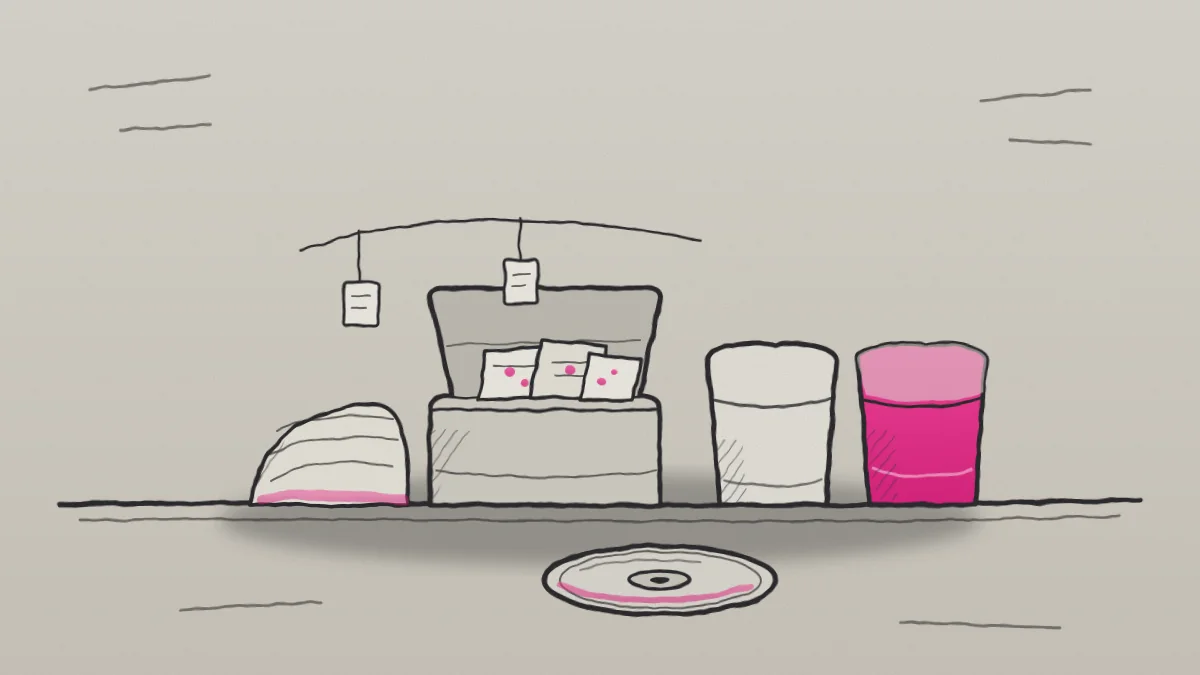
When they entered, the ASI is recorded as silent, then nervous, then admitting that he had received Rs 700. The complainant's wash of the left hand turned light pink. The ASI brought a shaving box from the adjoining toilet, PW-6 opened it, and the notes inside matched the numbers on the marked notes. The box wash turned muddy and the bedsheet on which Rs 600 had first been placed turned pink. Everything was bottled, labelled and sealed. The forensic report (Ex. P-26) found sodium carbonate and phenolphthalein in the solutions.
The recovery was "at the instance of the appellant", and the hand, box and bedsheet all turned pink.
That sentence carries the paragraph the defence most needed to defeat. The two independent clerks (PW-5 and PW-6) had admittedly heard nothing, but they were not called to prove what was said. They were called to prove who opened the box, what it held and what colour the water turned. The Court held that the demand and receipt of Rs 300 stood on the transcript and CD, the Rs 700 on the recovery and forensic evidence, and that the two together "unerringly" showed the ASI demanded and received Rs 1,000 for a negative report in the case he was investigating.
The presumption the Court never named
The trial court had invoked the presumption in Section 20 of the PC Act. The High Court's own analysis does not mention Section 20 by number, though the extract from Neeraj Dutta it reproduces explains the position: once demand and acceptance are proved, Section 20 requires the court to presume the gratification was a motive or reward for the improper performance, and the presumption can be rebutted. That presumption is a legal presumption, distinct from the discretionary inference of fact described in the same summary, and the summary adds that Section 20 does not apply to Section 13(1)(d)(i) and (ii).
The exam point is the order in which the questions arise. Nothing is presumed until demand and acceptance are proved by evidence. In this case the ASI's explanation (that he did not know the complainant, and that he was falsely implicated through the ACB) did not rebut anything, and the Court found no animosity between him and the Bureau witnesses. The judgment also does not discuss the argument on sanction or the absence of a voice sample in separate paragraphs, so those arguments are best understood as rejected on the cumulative finding, not as decided points of law.
Reading it today: the same case in new language
The offence is of 2007, the trial concluded before the new codes, and the conviction is under the 1988 Act as it then stood. The 2018 amendment is not discussed in the judgment. The Act, not the BNS, governs the offence: our chapter on offences by public servants explains that the old bribery sections of the IPC were absorbed into the PC Act. A student writing about this case today needs the new numbers for the procedure around it.
| Point | Old law | New law |
|---|---|---|
| Certificate for electronic record | Section 65-B IEA | Section 63 BSA (certificate in the prescribed Schedule form) |
| Cross-examination of own witness | Section 154 IEA | Section 157 BSA |
| Police statements to investigating officer | Section 161 CrPC | Section 180 BNSS |
| Police report on completion of investigation (final report) | Section 173 CrPC | Section 193 BNSS |
| Sanction to prosecute public servants (general provision) | Section 197 CrPC | Section 218 BNSS (a second proviso now deems sanction granted if the Government does not decide within 120 days) |
| Examination of the accused | Section 313 CrPC | Section 351 BNSS |
The BNSS row matters for one reason. The charge was that the ASI took money to submit a negative final report, which is the report under Section 193 BNSS. Our chapter on police investigation powers shows what a police report can say and how a Magistrate may treat a closure. The ASI argued he was not even authorised to submit one. The prosecution replied that the FIR was at his police station and the investigation was entrusted to him, and the Court's findings accept that the file, FIR No. 28/2007, was in his hands when the demand was made.
What stays open
The judgment's account of the money is not tidy. It says the complainant placed Rs 600 on the cot and handed Rs 100 to the ASI, yet also says he retained Rs 100 of the treated notes, and the recovered amount is Rs 700. The Court did not stop to reconcile this, and rested on the matching numbers and the chemical evidence. Nor did it decide whether a voice sample is required to prove a recorded voice; it treated the recording as proved through the officers who made it and the complainant who signed it. The sentence, two years under each section, was left untouched. These are points to keep in view when drafting an answer.
Practice
1. In a trap case under Sections 7 and 13(1)(d) of the Prevention of Corruption Act, 1988, the complainant turns hostile and denies any demand. Which statement follows the Constitution Bench in Neeraj Dutta, as applied in this judgment?
- demand and acceptance can still be proved through other oral, documentary or circumstantial evidence, and the trial does not abate
- the accused must be acquitted, since a hostile complainant ends the case
- recovery of the tainted notes alone is enough, whatever the complainant says
- demand need not be proved at all if the public servant accepted the money
Answer
(a). Demand and acceptance are the fact in issue and can be proved without the complainant. Option (b) is the very proposition rejected. Options (c) and (d) are wrong because mere receipt, without proof of demand or offer, is not an offence.
2. The prosecution tenders a CD of a recorded conversation. The certificate under Section 65-B of the Evidence Act is filed by the trap-laying officer during the trial, not with the charge-sheet. What does the judgment hold on the point?
- the CD is inadmissible because the certificate must accompany the charge-sheet
- the CD is admissible only if the accused consents to the late certificate
- the defect is curable and the certificate may be produced at any stage before the trial ends, if the accused is not prejudiced
- the certificate is unnecessary where the transcript is signed by the complainant
Answer
(c). Relying on T. Naseer and the passages it quotes from Arjun Panditrao, the Court treated late production as a curable defect. The certificate is still needed, so (d) is wrong; consent plays no part, so (b) is wrong.
3. As summarised in Neeraj Dutta and reproduced in this judgment, the presumption in Section 20 of the PC Act is:
- a discretionary presumption of fact that covers Sections 13(1)(d)(i) and (ii)
- a mandatory legal presumption that arises on proof of demand and acceptance under Section 7, and is open to rebuttal
- an irrebuttable presumption that arises on recovery of the tainted money
- a presumption that the demand itself was made, even when no evidence of demand exists
Answer
(b). The court must raise it once the foundational facts are proved, the accused may rebut it, and it does not apply to Section 13(1)(d)(i) and (ii). It does not supply the demand; the demand must be proved first.